

Every year, someone declares email marketing dead. And every year, the data proves them spectacularly wrong.
If you’re deciding where to allocate your limited marketing budget in 2026, the email marketing vs social media debate isn’t academic — it’s the difference between profitable growth and burning cash on algorithms you don’t control.
This guide cuts through the noise with current data, head-to-head comparisons, and a practical framework for deciding where each channel fits in your strategy. Specifically, there’s no fluff, no bias — instead, just the numbers and what they mean for your business.
Email Marketing ROI: The Numbers That Matter
Let’s start with the headline figure: email marketing delivers $36 to $42 for every $1 spent, making it the highest-ROI digital marketing channel by a significant margin (Litmus State of Email 2025, HubSpot Email Marketing ROI Report).
But averages hide the real story. Here’s how email marketing ROI breaks down by execution level:
| Execution Level | ROI per $1 Spent | What They Do Differently |
| Average program | $36–$42 | Basic segmentation, regular sends |
| Top quartile | $50+ | Behavioral segmentation, AI personalization, proper authentication |
| E-commerce optimized | $45+ | Abandoned cart flows, post-purchase sequences, product recommendations |
| SaaS optimized | $40+ | Onboarding automation, trial conversion, churn prevention |
In particular, the gap between average and top-performing programs is massive — and it’s driven entirely by strategy, not budget.A small business with 2,000 subscribers using behavioral automation can outperform a competitor with 50,000 subscribers batch-blasting newsletters.
Several factors explain why email marketing ROI remains dominant in 2026:
You own the audience. Your email list is an asset no platform can take away. For example, when Facebook’s algorithm cut organic reach to 2%, businesses with large followings lost access to their own audience overnight.Email subscribers? Still reachable. Still yours.
Automation compounds returns. Automated emails generate 320% more revenue than non-automated emails despite accounting for only 2% of send volume (Omnisend 2026 Ecommerce Marketing Report). Set up a welcome series once, and it converts new subscribers around the clock.
Personalization drives conversion. Segmented email campaigns generate 760% more revenue than non-segmented campaigns (Growth Navigate, 2026). Dynamic content strategies achieve 258% higher ROI compared to static campaigns (Genesys Growth, 2026).
Costs scale favorably. Sending 100 emails and sending 1,000,000 emails cost nearly the same on most platforms. This is impossible in paid social advertising, where costs scale linearly with every impression.
Social Media Marketing ROI: A More Complicated Picture
Social media marketing ROI is harder to pin down — not because the channel doesn’t work, but because it serves a fundamentally different purpose.
Paid social advertising returns an average of $2.80 for every $1 spent across platforms (DataReportal / Sprout Social, 2025–2026). That’s roughly 1/13th of email’s average return.
Influencer marketing fares better, returning $5.78 per dollar invested in 2026, with top-performing TikTok campaigns achieving 10–20x returns (Influencer Marketing Hub, 2026).
Organic social media ROI is nearly impossible to measure accurately. The attribution problem is real: someone sees your Instagram post, doesn’t click, but Googles your brand three days later and buys. Most analytics credit Google, not Instagram.
Here’s the breakdown by platform and format:
| Channel / Format | Average ROI / ROAS | Key Consideration |
| Facebook Ads (average) | 2.79 ROAS | Conversion rate 9.2% — strongest for direct response |
| Instagram Ads | 2.5–4x ROAS | B2C brands report 78% positive returns |
| Influencer Marketing | $5.78 per $1 | Highly variable; micro-influencers often outperform |
| Organic Social | Difficult to measure | Primary value: awareness, discovery, community |
| TikTok Ads | Growing rapidly | 5.3% engagement rate, but attribution is complex |
| LinkedIn Ads | Highest CPC | Strongest for B2B lead generation |
The average ROI for social media marketing tells only part of the story. Specifically, social media’s true value sits at the top of the funnel — it’s where people discover brands they didn’t know existed. 60%+ of product discovery now occurs on TikTok, Instagram, and YouTube, compared to just 34.5% on Google (Sprout Social, 2026).
That discovery power is real. But it’s fundamentally different from the conversion power that email provides.
Head-to-Head: Email vs Social Media by Every Metric That Counts
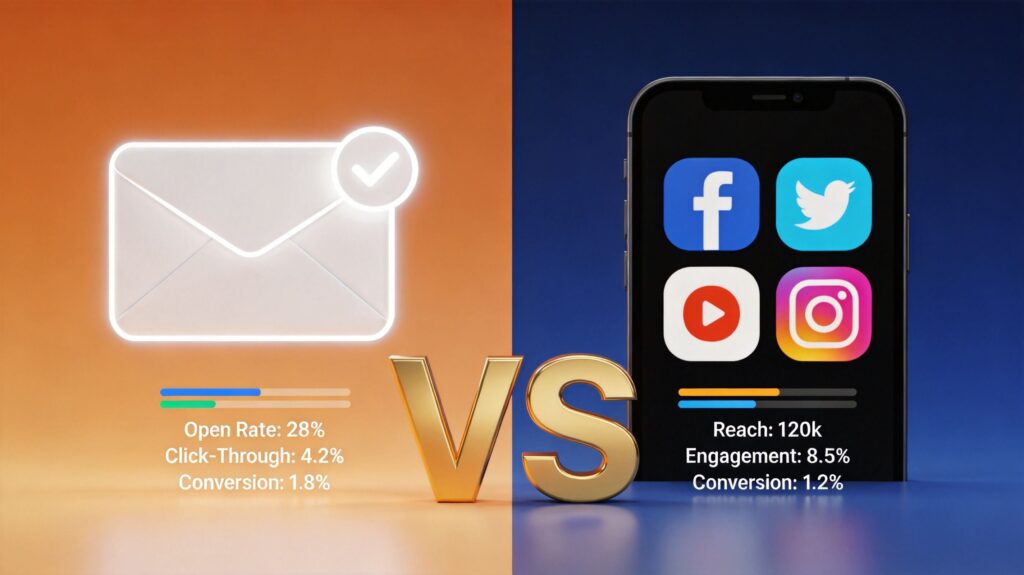
Let’s put the two channels side by side on the metrics that actually determine where your budget should go:
| Metric | Email Marketing | Social Media Marketing |
| Average ROI | $36–$42 per $1 | $2.80 per $1 (paid) |
| Organic reach | 85–95% of list receives your message | 1–6% of followers see your post |
| Conversion rate | 4.24% (email traffic) | 0.59% (social traffic) |
| Click-through rate | 2.09% average (2025) | 0.5–1.5% average |
| Audience ownership | Fully owned — you control the list | Rented — platform controls access |
| Content lifespan | 24–48 hours in inbox | 15 minutes – 24 hours in feed |
| Cost to reach 10K | $10–$50/month | $100–$500/month (paid) |
| Personalization depth | Individual-level behavioral targeting | Broad demographic/interest targeting |
| Best for | Conversions, retention, revenue | Discovery, awareness, community |
| Biggest risk | List decay, deliverability issues | Algorithm changes, rising ad costs |
A few numbers deserve special attention:
The conversion gap is enormous. In fact, email traffic converts at 4.24%, compared to 2.49% for search and just 0.59% for social media (Shopify 2025 Report). That means email converts at 7x the rate of social media traffic. If you’re optimizing for sales — not likes — this gap is decisive.
The reach gap is widening. Facebook’s organic reach has collapsed from 16% in 2012 to roughly 1–2% in 2025–2026. Instagram organic reach dropped 12% year-over-year. LinkedIn organic reach declined 34% over the same period (Hootsuite, 2025). Meanwhile, email delivery rates remain stable at 85–95% for well-maintained lists.
50% of consumers purchased directly from an email in 2024, compared to significantly fewer from social media posts or ads (DesignModo, 2026). Email isn’t just a communication channel — for half your audience, it’s a direct sales channel.
Why Email Marketing ROI Outperforms Social Media
The ROI gap between email and social isn’t accidental. It’s structural, and understanding why helps you make better allocation decisions.
Permission Changes Everything
Every person on your email list actively chose to hear from you. That consent creates a fundamentally different relationship than any advertising channel can replicate. Social media followers might have tapped “follow” once and forgotten about it. Email subscribers raised their hand and said, “send me your content.”
This permission gap explains the conversion difference. One in three people who click on an automated email makes a purchase, compared to only one in twenty for standard campaign emails — and the social media equivalent is even lower (Omnisend, 2026).
No Algorithm Stands Between You and Your Audience
When you send an email, it arrives. Spam filters exist, deliverability requires attention, but the fundamental relationship between sender and subscriber isn’t subject to a third party’s algorithm deciding who sees what.
Social media operates on rented ground. Specifically, platforms constantly adjust algorithms to prioritize paid content and keep users on-platform, not clicking through to your website. As a result, the more successful a social platform becomes, the more it charges businesses to reach their own followers.
Automation Creates Compounding Returns
Email automation is the single biggest ROI multiplier available to marketers. For example, consider these numbers:
- Automated emails drive 37% of total email revenue from just 2% of send volume (Klaviyo, 2026)
- Welcome email workflows achieve a 58.26% click-to-conversion rate — the highest of any automation type (RevenueMemo, 2026)
- Abandoned cart email sequences generate 6.5x more revenue than single emails (Mailmend, 2026)
Social media has no equivalent. Specifically, you can’t set up a “welcome sequence” that automatically nurtures every new follower. Consequently, each piece of social content competes independently for algorithmic favor.
Personalization at Scale
Email marketing platforms in 2026 offer deep personalization that social media can’t match:
- Behavior-based emails generate 2.8x to 300.7x higher conversion rates compared to non-personalized emails, depending on industry (Moengage, 2025)
- Dynamic content drives 61% higher click-through rates and 14.5% higher conversion rates (Harman Media, 2025)
- 63% of marketers now use AI tools in email campaigns, driving 41% higher revenue per send (Knak, 2026)
Social media personalization is mostly limited to ad targeting — and you pay for every targeted impression.
When Social Media Outperforms Email
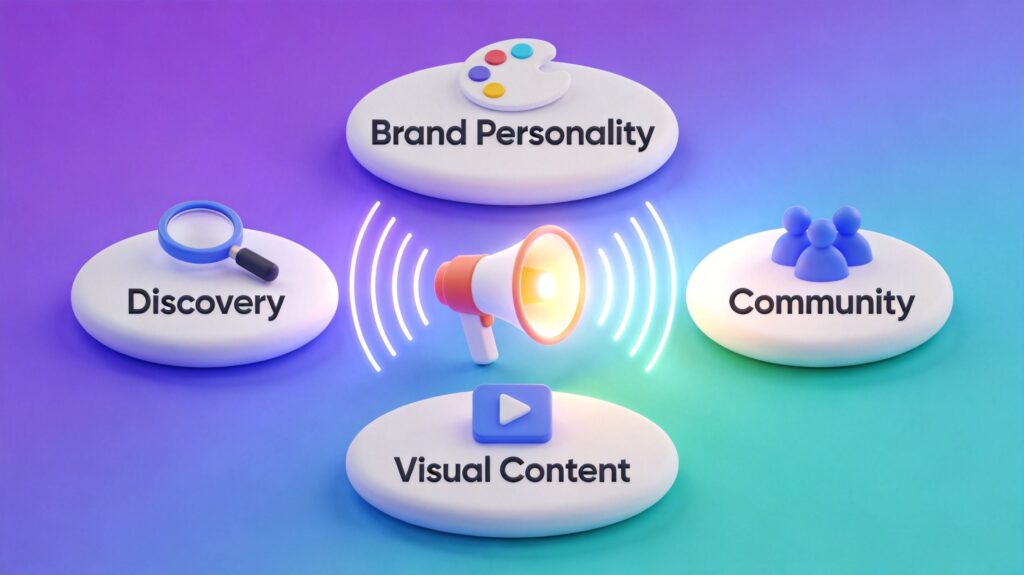
Email wins on ROI and conversion. But there are specific scenarios where social media delivers more value — and pretending otherwise isn’t honest analysis.
Brand Discovery and Awareness
Email can only reach people already on your list. In contrast, social media introduces your brand to people who’ve never heard of you. Therefore, if awareness is your primary goal, social media is the more efficient channel.
This is especially true for newer businesses. A brand with 500 email subscribers and 10,000 Instagram followers will generate more initial awareness through social content than through email sends — though the conversion rate per impression will be far lower.
Visual Storytelling and Brand Personality
Instagram, TikTok, and YouTube are built for visual content. Showing your product in action, telling stories through video, and building a brand personality that resonates — these are fundamentally visual tasks that email handles poorly.
If your business relies on visual appeal (fashion, food, travel, design), social media’s format advantages are significant.
Community Building and Real-Time Engagement
Social media enables two-way conversations at scale. For example, comments, DMs, live streams, and community features create relationships that feel interactive in ways email can’t replicate. Therefore, for businesses where community is a core value proposition — coaching, education, membership programs — social media’s engagement model is genuinely superior.
Reaching Younger Demographics
While email usage remains high across all age groups (99% check daily), younger audiences spend disproportionate time on social platforms. If your target market is Gen Z, you need to meet them where they are — even if conversion happens later via email.
The ROI Statistics: Email Marketing vs Social Media in 2026
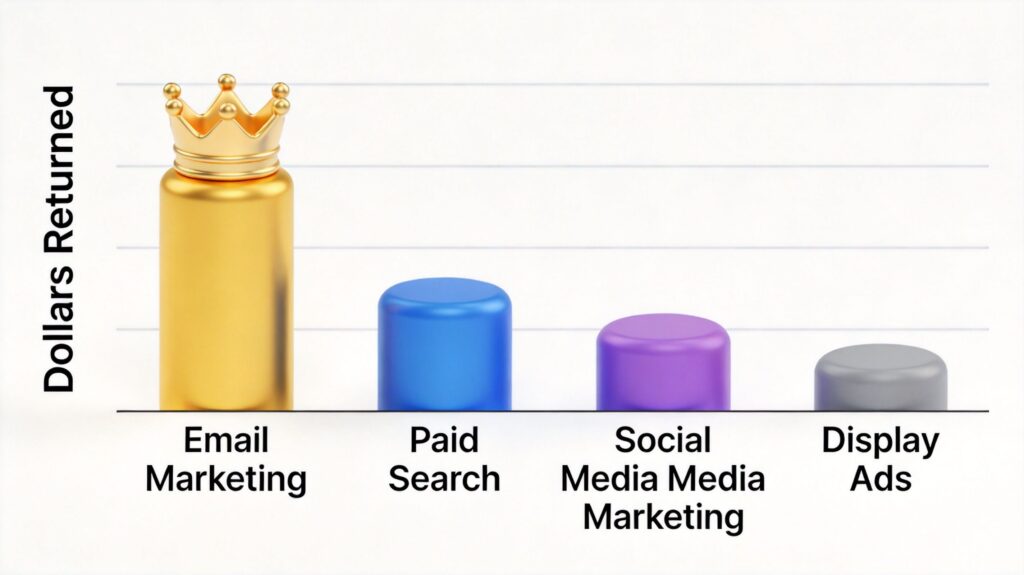
Email marketing statistics:
- $36–$42 average ROI per dollar spent (Litmus / HubSpot, 2025–2026)
- 79% of marketers rank email as their top-performing sales channel (Litmus State of Email 2025)
- 42% of marketers rank email as their most effective channel overall, versus 16% for social media (DesignModo, 2026)
- 4.24% email conversion rate vs. 0.59% social conversion rate (Shopify / GrowthNavigate, 2025)
- Segmented campaigns generate 760% more revenue (Growth Navigate, 2026)
Social media marketing statistics:
- $2.80 average return per dollar on paid social ads (Sprout Social, 2026)
- Facebook organic reach: 1–2% of followers (Hootsuite, 2025)
- 68% of marketers now track social ROI, up from 42% in 2023 (Social Strategy Hub, 2026)
- 81% of consumers make impulse purchases via social media (Sprout Social, 2026)
- Social commerce market reached $2.11 trillion in 2026 (Mordor Intelligence, 2026)
The data tells a clear story: email marketing ROI statistics consistently show 12–18x higher returns than social media. But social media marketing ROI statistics reveal a channel that excels at different stages of the customer journey.
How to Use Both Channels Together for Maximum ROI
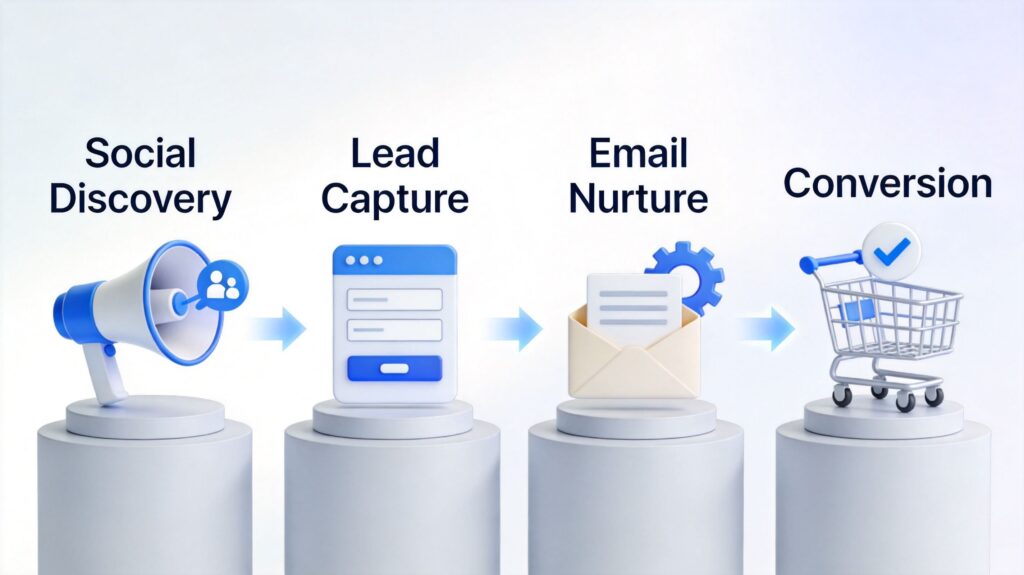
The smartest marketers don’t choose between email and social media. Instead, they use each channel for its strength and build a pipeline that makes them work together.
The Social-to-Email Pipeline
This is the highest-leverage strategy available:
- Social media generates awareness — new people discover your brand through content, ads, or mentions
- Lead magnets capture email addresses — a free resource, discount, or exclusive content trades for an email
- Email nurtures and converts — automated sequences guide subscribers toward purchase
- Social retargeting re-engages — email subscribers who haven’t opened recently see your content on social
This pipeline captures social’s discovery power while leveraging email’s conversion engine. As a result, the businesses that implement this system consistently outperform those relying on either channel alone.
Budget Allocation Framework
How should you split your marketing budget? Below, here’s a practical framework based on business stage:
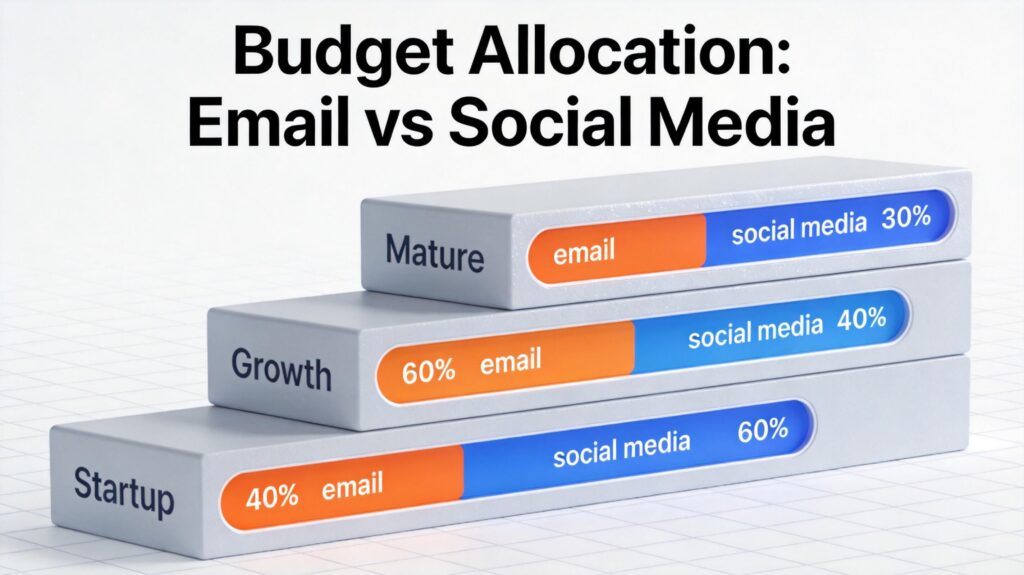
| Business Stage | Email Budget | Social Budget | Rationale |
| Pre-launch / < 500 subscribers | 40% | 60% | Social builds initial awareness; invest in list growth |
| Growth / 500–5,000 subscribers | 60% | 40% | Email starts compounding; social feeds the funnel |
| Mature / 5,000+ subscribers | 70% | 30% | Email drives revenue; social maintains awareness |
| Enterprise / multi-product | 50% | 50% | Both channels at scale; sophisticated attribution |
These aren’t arbitrary numbers. In fact, they reflect where the ROI actually lives at each stage. First, early on, you need social to build the audience that email will later convert. Then, as your list grows, email’s compounding returns justify a larger share of budget.
Practical Implementation Steps
If you’ve been over-investing in social media and under-investing in email, here’s how to rebalance without losing momentum:
- Add email capture to every touchpoint — website popups, social bios, checkout pages, and lead magnets should all feed your list
- Set up a welcome series — 3–5 automated emails for new subscribers that introduce your brand and drive first purchase
- Build one revenue automation — start with abandoned cart (e-commerce) or trial conversion (SaaS) flows
- Send a weekly newsletter — consistent value builds trust and keeps your brand top-of-mind
- Track revenue attribution — use UTM parameters and platform analytics to see which channel actually drives sales
For email marketing tools that make this easy, check out our guide to the best free email marketing tools for small business and our Kit vs Mailchimp comparison to choose the right platform.
Industry-Specific ROI Comparison
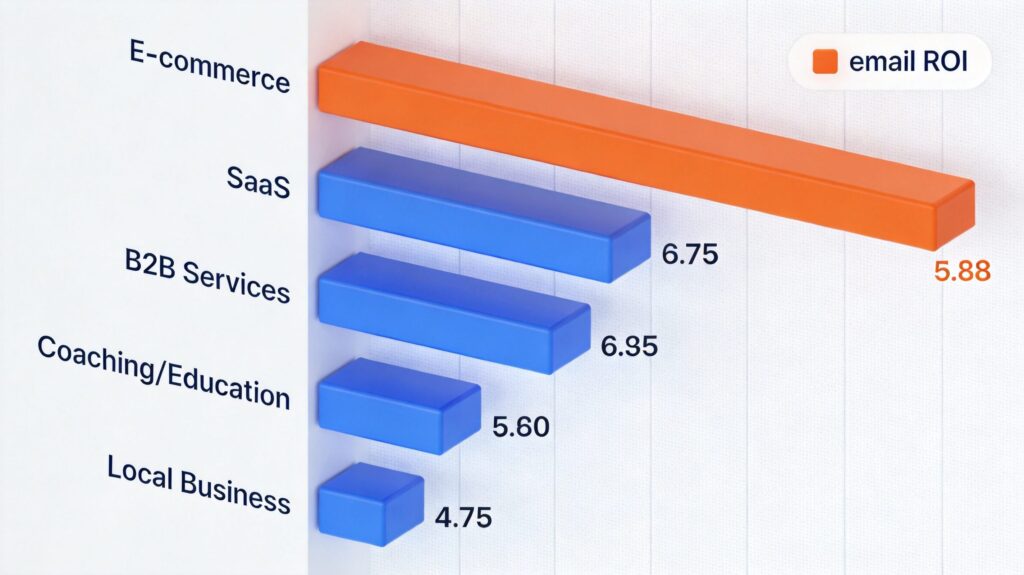
ROI varies significantly by industry. Below, here’s how email and social media compare across common verticals:
| Industry | Email ROI per $1 | Social ROI per $1 | Better Channel for Revenue |
| E-commerce / Retail | $45+ | $2.80 (paid) | Email (abandoned cart, product recs) |
| SaaS / Tech | $40+ | $3–5 (paid LinkedIn) | Email (onboarding, retention) |
| B2B Services | $38+ | $4–6 (LinkedIn + content) | Email (nurture sequences) |
| Coaching / Education | $42+ | $5.78 (influencer) | Email (course funnels) |
| Local Business | $36+ | $3–4 (Facebook local) | Tie (social for local discovery) |
E-commerce businesses see the largest gap because email automation — particularly abandoned cart recovery — captures revenue that would otherwise be lost. A single abandoned cart sequence generating $28.89 per recipient for top performers (Email Vendor Selection, 2026) is an ROI multiplier that no social media strategy can match.
Common Mistakes That Kill ROI on Both Channels

Even with the right channel mix, execution errors can destroy your returns.
Email mistakes that reduce ROI:
- Batch-and-blast instead of segmentation — sending the same email to everyone ignores the 760% revenue lift from segmentation
- Ignoring automation — manual campaigns generate a fraction of the revenue that automated flows produce
- Poor deliverability — if your emails land in spam, ROI drops to zero. SPF, DKIM, and DMARC authentication are non-negotiable in 2026
- Weak subject lines — 47% of email recipients decide whether to open based on subject line alone. Learn more about email subject lines that get opened
Social media mistakes that reduce ROI:
- Treating social as a sales channel — social excels at awareness, not closing. Pushing hard sales content on social audiences generates resistance, not revenue
- Chasing vanity metrics — likes and followers don’t pay bills. Track click-through rates, website traffic, and email signups instead
- Ignoring the algorithm — organic reach continues declining. If you’re not adapting your content strategy, your effective reach shrinks every quarter
- No email capture strategy — building a large social following without capturing email addresses means you own nothing
The Verdict: Email Wins on ROI, Social Wins on Reach
The email marketing vs social media marketing comparison isn’t a competition with one winner. It’s a question of which channel does what better — and the data is clear:
Email marketing drives more ROI — $36–42 per dollar vs. $2.80 per dollar for paid social. It converts at 7x the rate of social media traffic, so every send compounds your bottom line. Subscribers are owned, not rented. Automation compounds returns in ways social media can’t match.
Social media drives more reach — it’s where people discover new brands, where visual storytelling thrives, and where real-time community happens. No email list can replicate the viral potential of a well-timed social post.
The best strategy combines both. Use social media to build awareness and capture email addresses. Use email to nurture, convert, and retain. This isn’t complicated — but it requires intentional execution.
In 2026, the businesses that thrive aren’t choosing between email and social. They’re building systems that make both channels work together — social at the top of the funnel, email at the bottom, and revenue flowing through the entire pipeline.
If you’re not sure where to start, prioritize building your email list. It’s the asset that compounds in value over time, regardless of what happens to any social platform. Ready to get started? Explore our complete guide to building an email list from scratch.
[…] you still need convincing, read our email marketing vs social media ROI comparison — the numbers make the case more clearly than any argument […]
bLPlGWHXzWlbPjRXf